General Description
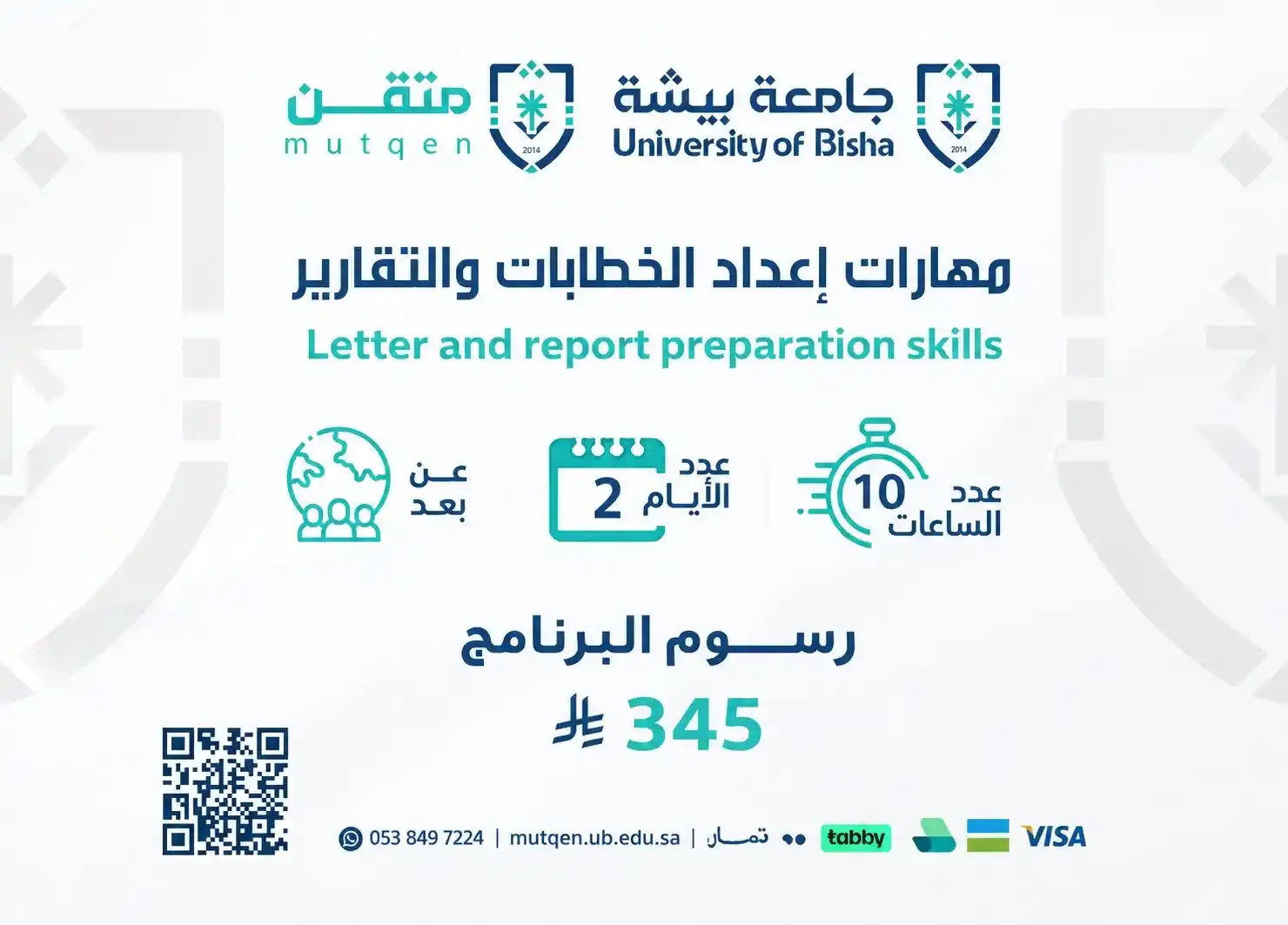
إليك ترجمة احترافية لبرنامج مهارات إعداد الخطابات والتقارير، مع استخدام مصطلحات الأعمال والمراسلات الإدارية المعتمدة دولياً:
I. Introduction
Mastering the art of drafting letters and reports is a cornerstone of effective workplace communication. It ensures that information is conveyed with precision and clarity, providing critical support for decision-making. As organizations evolve, it has become essential to master formal writing styles and document drafting in a professional manner that reflects the corporate image and achieves strategic goals. This program is designed to equip participants with the knowledge and skills needed to produce professional letters and reports, adhering to linguistic rules, clear styling, and proper technical formatting.
II. General Objective
To enhance participants' capabilities in drafting and preparing letters and reports with a professional flair, ensuring message clarity, content accuracy, and the fulfillment of intended objectives.
III. Detailed Learning Objectives
By the end of this program, the participant will be able to:
-
Recognize the importance of reports and letters in administrative functions.
-
Distinguish between various types of reports and letters and their specific uses.
-
Apply the necessary steps for drafting formal and informal correspondence.
-
Utilize correct linguistic and grammatical styles in professional writing.
-
Organize the content of a report or letter to effectively meet its purpose.
-
Employ technical formatting tools for polished document presentation.
-
Review and edit documents effectively before submission or dispatch.
IV. Training Modules
Day 1: Letter Drafting Skills
-
Concepts and Importance of Administrative Correspondence:
-
Defining letters and their roles in the modern work environment.
-
The significance of letters as a primary tool for formal communication between individuals and entities.
-
-
Types of Letters:
-
Formal vs. Informal correspondence.
-
Internal vs. External memos and letters.
-
Determining the appropriate type for specific scenarios.
-
-
Elements of an Administrative Letter:
-
Sender and recipient information (Headers).
-
Date, Subject line, and Salutations.
-
Body of the letter, Closing, and Signature blocks.
-
-
Drafting Style and Composition:
-
Utilizing clear, precise, and professional language.
-
Avoiding ambiguity and unnecessary verbosity.
-
Essential spelling and grammar rules for business.
-
-
Standardized Letter Templates:
-
Identifying official institutional templates.
-
Customizing templates to fit different professional contexts.
-
Day 2: Report Writing Skills
-
Concepts and Importance of Reports:
-
Defining a report as a document for data recording and analysis.
-
The role of reports in supporting administrative and technical decisions.
-
-
Types of Reports:
-
Periodic, Special, Technical, and Analytical reports.
-
Use cases for each specific report type.
-
-
Stages of Report Preparation:
-
Planning: Identifying the objective and the target audience.
-
Data Collection: Gathering necessary information.
-
Analysis: Interpreting data and formulating findings.
-
-
Components of a Professional Report:
-
Introduction: Defining the purpose and scope.
-
Body: Presenting data and detailed analysis.
-
Conclusion: Summarizing results and providing recommendations.
-
-
Technical Presentation and Layout:
-
Formatting text, headings, and sub-headings.
-
Incorporating tables, charts, and visual aids.
-
Maintaining a clear visual language.
-
-
Common Pitfalls in Report Writing:
-
Stylistic and linguistic errors.
-
Vague objectives or unclear messaging.
-
Poor content organization and flow.
-
V. Program Features
-
A training methodology that blends practical explanation with real-world examples.
-
Hands-on exercises for drafting various letters and reports.
-
Provision of ready-to-use templates and professional toolkits.
-
Simultaneous focus on both linguistic accuracy and technical formatting.
-
High flexibility to adapt content to the specific nature of the organization.
VI. Program Outcomes
-
Professional mastery of drafting administrative correspondence.
-
Capability to prepare clear, accurate, and well-structured reports.
-
Improved formal writing skills aligned with corporate standards.
-
Ability to avoid common errors in document preparation.
-
Ownership of practical templates that facilitate future drafting tasks.